
Double-hung vs. casement windows: how each opens, which seals tighter, what they cost, how to clean them and where each works best in a North Atlanta home.
In this article
- How double-hung and casement windows work
- Double-hung vs. casement windows at a glance
- Ventilation: which lets in more air?
- Energy efficiency: which seals tighter?
- Cleaning and everyday use
- Cost: are casement windows more expensive?
- Style: which suits your house?
- Where each style works best
- Double-hung and casement windows we install
- Frequently asked questions
- Get help choosing at your free estimate
If you’re replacing windows, one of the first choices you’ll make is the style. For most North Atlanta homes it comes down to two: double-hung windows, the classic up-and-down sash you probably have now, and casement windows, which crank open like a door.
Neither is better across the board. Double-hung vs. casement windows is really a question of where the window is, how you use the room and the look of your house.
How double-hung and casement windows work
Double-hung windows
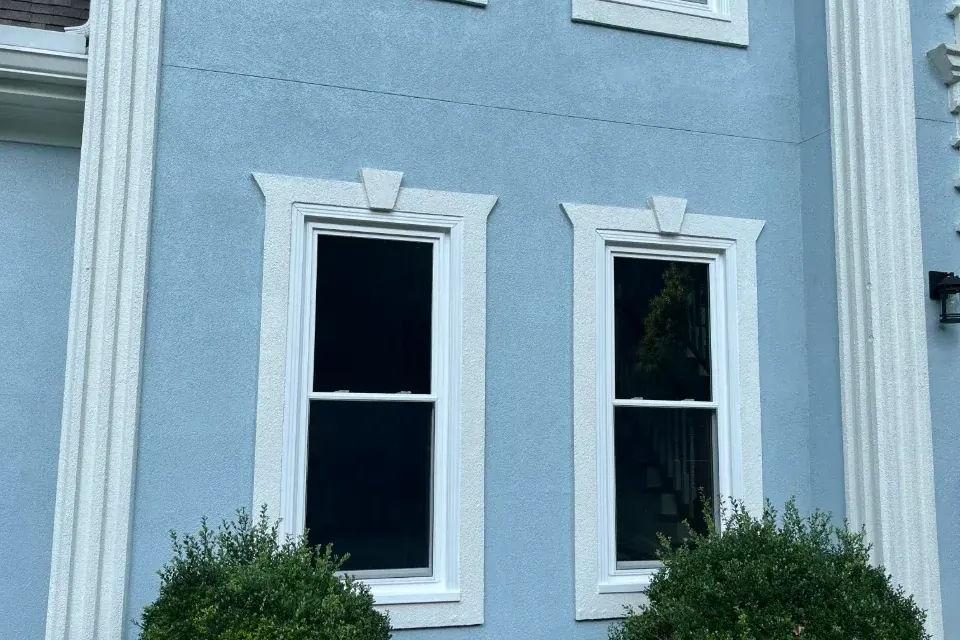
A double-hung window has two sashes that slide up and down in the frame. You can open the bottom, the top or both. Balances inside the frame hold each sash where you leave it, and on most modern windows both sashes tilt into the room so you can clean the outside glass from inside the house.
A single-hung window looks the same, but only the bottom sash moves. It costs less and has fewer moving parts.
Casement windows
A casement window is hinged on one side and swings outward when you turn a crank. When you lock it, the sash is pulled in against the weatherstripping all the way around the frame. Two or three casements are often joined in one frame, sometimes with a picture window in the middle.
An awning window is a casement turned on its side: it’s hinged at the top and swings out from the bottom. Because the open sash forms a little roof, an awning window can usually stay open in a light rain.
Double-hung vs. casement windows at a glance
| Double-hung | Casement | |
|---|---|---|
| How it opens | Sashes slide up and down | Swings outward on a crank |
| Open area | Up to about half the window | Nearly the whole window |
| Air sealing | Depends on the window’s rating | Sash presses against seals when locked |
| Cleaning | Sashes tilt in | Reach the outside through the open sash |
| Screen | Outside | Inside |
| Typical cost | Often lower | Often higher |
| Looks | Traditional | Clean, open view |
Ventilation: which lets in more air?
Casements win on sheer airflow. A casement opens almost its entire glass area, while a double-hung window can open at most about half, since one sash always overlaps the other. An open casement sash also catches breezes moving along the wall and steers them inside, which is handy on a mild spring evening.
Double-hung windows have their own trick. Open the bottom sash a little and the top sash a little, and warm air leaves through the top while cooler air comes in at the bottom. Opening just the top sash is also a good way to air out a room where small children play, since the lower half stays closed.
Energy efficiency: which seals tighter?
Casement windows have a reputation for sealing tightly, and the reason is mechanical. When you lock a casement, the sash is pressed into the weatherstripping on all four sides. A double-hung window seals with weatherstripping where the sashes slide past the frame and each other, and those seals need to allow movement.
That said, the style is only part of the story. How well a specific window is built matters more, and it’s measured. Look for the air leakage rating, in cubic feet of air per minute per square foot of window. For example, Vytex rates its Potomac-hp series at .01, helped by a magnetic seal that pulls the sash tight to the frame. That’s a very tight window by any standard.
Glass matters too. The U-factor and solar heat gain coefficient (SHGC) on the NFRC label rate the whole window, glass and frame together. The glass package you choose moves them the most, but the frame and style play a part, so compare the label for the exact window you’re quoted. In Georgia, where the cooling season is long, a low SHGC is worth asking for whichever style you pick: the U.S. Department of Energy notes that low SHGCs reduce heat gain in warm climates.
Cleaning and everyday use
Double-hung windows are easy to live with. Both sashes on our Vytex double-hung windows tilt into the room, so you can wash the outside glass on a second-floor window without a ladder. Locks sit at the meeting rail, at a comfortable height.
Casements open with a crank at the sill, which is a real advantage where the window is hard to reach. Over a kitchen sink or behind a deep counter, turning a crank is much easier than lifting a sash. To clean the outside glass, open the sash fully and reach through the opening. Casements that open a full 90 degrees make that easier.
One practical difference: because a casement swings out, think about what’s outside it. A sash that opens over a deck, a walkway or a spot where people pass can get bumped. And close your casements when one of our summer thunderstorms rolls in, since an open sash catches the wind.
Screens sit on the outside of a double-hung window and on the inside of a casement, where they’re protected from the weather.
Cost: are casement windows more expensive?
Often, yes, when you compare the same size in the same line. Casements have more hardware (the crank operator, hinges and a multi-point lock), and that adds to the price. Angi’s Atlanta cost guide lists double-hung windows at roughly $150 to $650 per window and casements at roughly $150 to $1,000, so the ranges overlap a lot. The line you choose, the size and the glass package will move the price more than the style alone.
Style: which suits your house?
Double-hung windows are the traditional choice, and they look right on the brick and siding two-stories found across Johns Creek, Alpharetta, Duluth and Roswell. Add grids and they suit colonial, craftsman and farmhouse styles.
Casements have a cleaner look, with one large pane and no meeting rail across the middle of the view. They suit contemporary and transitional homes and rooms where the view is the point. Many houses use both: double-hung windows on the front and casements or a casement-and-picture combination at the back, facing the yard.
Keeping the same style on each side of the house usually looks best from the street.
Where each style works best
- Over the kitchen sink: casement or awning, because the crank is easy to reach over a counter.
- Living rooms and family rooms with a view: casements, or a picture window flanked by casements.
- Bedrooms and street-facing walls on a traditional house: double-hung, to match the style of the home.
- Next to a deck, patio or walkway: double-hung, so no sash swings into the way.
- Bathrooms: an awning window set high on the wall gives airflow and privacy, especially with obscured glass.
- Upstairs rooms you’ll clean from inside: double-hung with tilt-in sashes, or casements that open wide.
Double-hung and casement windows we install
We install double-hung windows in all three Vytex series, from the entry-level Georgetown to the mid-range Fortis and the premium Potomac-hp, and in the VinylMax 4700 Series.
For casement and awning windows there are two choices. Potomac-hp also comes in casement and awning styles. VinylMax Prestige casements open a full 90 degrees for airflow and cleaning. The line runs on a Roto X-Drive operator with hardened gears, locks at several points with one lever, and has a crank handle that folds down out of the way. Prestige casements and awnings can also be combined with picture windows on a single frame.
You can see every line on our windows page, and we’ll show you samples at your estimate.
Frequently asked questions
Are casement windows more energy efficient than double-hung windows?
Casements tend to seal tightly because the sash presses against its seals when locked. But a well-built double-hung window can be very tight too, so compare the air leakage rating and the NFRC label of the exact windows you’re quoted rather than the style alone.
Can you replace a double-hung window with a casement?
Often, yes. Replacement windows are made to fit your existing opening, so many openings can take a different style. We check each opening at your estimate and tell you which styles fit.
Which is easier to clean?
For most people, double-hung windows with tilt-in sashes, because you can wash both sides of the glass from inside. Casements that open a full 90 degrees are close behind, since you can reach the outside glass through the open sash.
Do casement windows let rain in?
Not when they’re closed and locked. When a casement is open, wind can blow rain in, so close it during storms. An awning window can usually stay open in a light rain because the sash shelters the opening.
Get help choosing at your free estimate
Crescent Windows and Doors replaces windows in Johns Creek, Duluth, Alpharetta, Roswell, Milton, Cumming, Suwanee, Buford and Lawrenceville. We’ll look at each opening with you, show you samples, explain which styles fit and give you a written quote, with no pressure to buy. Call 470-533-0777 or book your free estimate online.